
Insurance & Cashless Facilities

At our clinic, we believe that quality healthcare should be accessible and stress-free. To make your treatment experience smooth and affordable, we work with multiple insurance providers and offer cashless treatment options for eligible procedures.
Our dedicated insurance team assists patients with documentation, approvals, and claim processing so you can focus on your recovery while we handle the paperwork.
Cashless Insurance Facility
We provide cashless treatment through leading insurance companies and Third Party Administrators (TPAs). If your insurance policy is eligible, your treatment expenses can be settled directly with the insurance provider, reducing out-of-pocket costs.
Our team will guide you through:
- Insurance eligibility verification
- Pre-authorization approval
- Documentation and claim submission
- Cashless treatment coordination
Insurance Coverage for Eye Treatments
Many insurance policies cover medically necessary eye procedures, including:
- Cataract surgery
- Retinal treatments
- Glaucoma management
- Eye injuries and emergency care
- Refractive procedures such as LASIK or SMILE PRO eye surgery are generally considered elective but some insurance comapnies do cover them. Our team can help you verify your policy details.
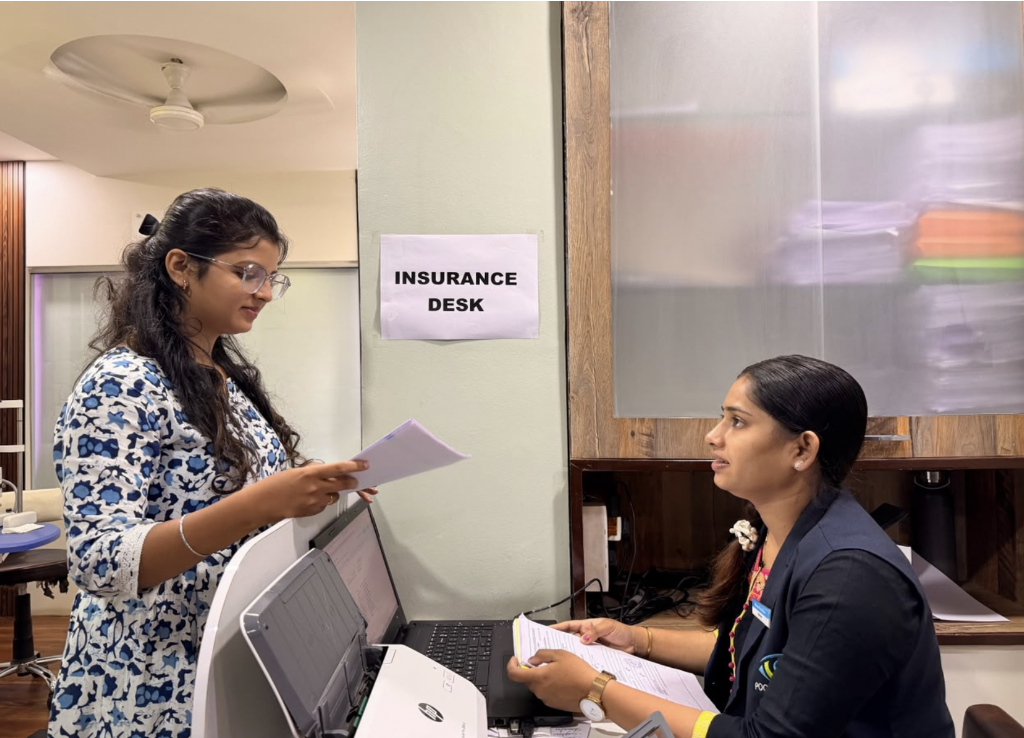

Documents Required for Insurance Claims
Our insurance desk will guide you through the required paperwork to ensure a smooth claim process.
- To process insurance approvals efficiently, patients may need to provide:
- Valid health insurance card and policy details
- Government ID proof (Adhar and PAN card)
- Doctor’s prescription or referral (if applicable)
- Previous medical records or reports
- Photograph
Easy Claim Assistance
We understand that insurance procedures can sometimes be confusing. Our experienced staff provides end-to-end support, including:
- Pre-authorization assistance
- Cashless admission support
- Claim documentation help
- Post-treatment claim guidance
FAQs
Will the charges for my OPD and diagnostic services before admission be covered in the TPA?
Coverage for diagnostic tests, OPD consultation, and other tests done before admission will depend on your policy terms and conditions.
Once admitted, all costs incurred during the stay are usually reimbursed as per the policy terms and conditions.
You have to go for reimbursement for pre- and post-hospitalisation expense.
How long does pre-authorisation confirmation take?
Pre-authorisation typically depends upon on the T&C of TPA.
When do cashless claims get rejected?
Cashless claims get rejected due to the mismatch information provided by the patient , in case of frauds and various such reasons.
How can I check my claim status?
You can check your claim status by calling your insurance company’s call centre, visiting the TPA’s website, or contacting the Clinic's Insurance Help Desk.
Why do I need to pay an additional amount even after insurance approval?
Even if your insurance claim is approved, the final approved amount may be lower than the total hospital bill. Any difference between the approved amount and the total bill must be paid by the patient.
This may occur due to:
- Non-medical items that are not covered as per Insurance Regulatory and Development Authority of India (IRDAI) guidelines
- Co-payment requirements specified in your policy
- Policy-based deductions or exclusions
These charges are the patient’s responsibility and must be settled at the time of discharge.
If the TPA reduces the final approval post-discharge, the difference is payable by the patient.
In case of denial, the entire bill will have to be settled at the time of discharge.
What documents are required to avail cashless treatment?
Patients are generally required to provide a valid health insurance card, government-issued photo ID, policy details, and any documents requested by the insurance provider or TPA for processing the claim.
Is cashless treatment available for all insurance policies?
Cashless treatment is available only for policies that are active and accepted at the hospital through the insurer's or TPA's network. Eligibility may vary depending on policy terms and conditions.
What is the difference between cashless and reimbursement claims?
In a cashless claim, the insurer directly settles eligible medical expenses with the hospital. In a reimbursement claim, the patient pays the expenses upfront and later submits documents to the insurer for reimbursement.
Can I avail cashless treatment for emergency admissions?
Yes, many insurance policies allow cashless treatment for emergencies. However, the hospital must submit the required documents to the insurer or TPA within the stipulated timeline for approval.
What expenses are usually not covered under cashless insurance?
Non-medical items, registration charges, consumables, upgraded room charges beyond policy limits, and expenses excluded under the policy may not be covered. Coverage depends on the specific insurance plan.
What should I do if my cashless request is denied?
If a cashless request is denied, you may proceed with treatment and later file a reimbursement claim with your insurance company, subject to policy terms and approval.
Can I use my health insurance for day-care procedures?
Many health insurance policies cover eligible day-care procedures that do not require a 24-hour hospital stay. Coverage depends on the policy benefits and insurer guidelines.
Does insurance cover pre- and post-hospitalization expenses?
Many policies provide coverage for specified pre-hospitalization and post-hospitalization expenses related to the treatment, subject to policy limits and conditions.
What is a TPA and how does it help with my insurance claim?
A Third-Party Administrator (TPA) acts as an intermediary between the insurer, hospital, and patient. TPAs help process cashless requests, coordinate approvals, and manage claim-related documentation.
Can I get an estimate of my treatment expenses before admission?
Yes, the hospital can provide an estimated cost of treatment before admission. This estimate can help patients understand expected expenses and initiate insurance authorization processes in advance.