
Pediatric or Children Eye Care
Ensuring every child’s vision is strong, healthy, and ready for life
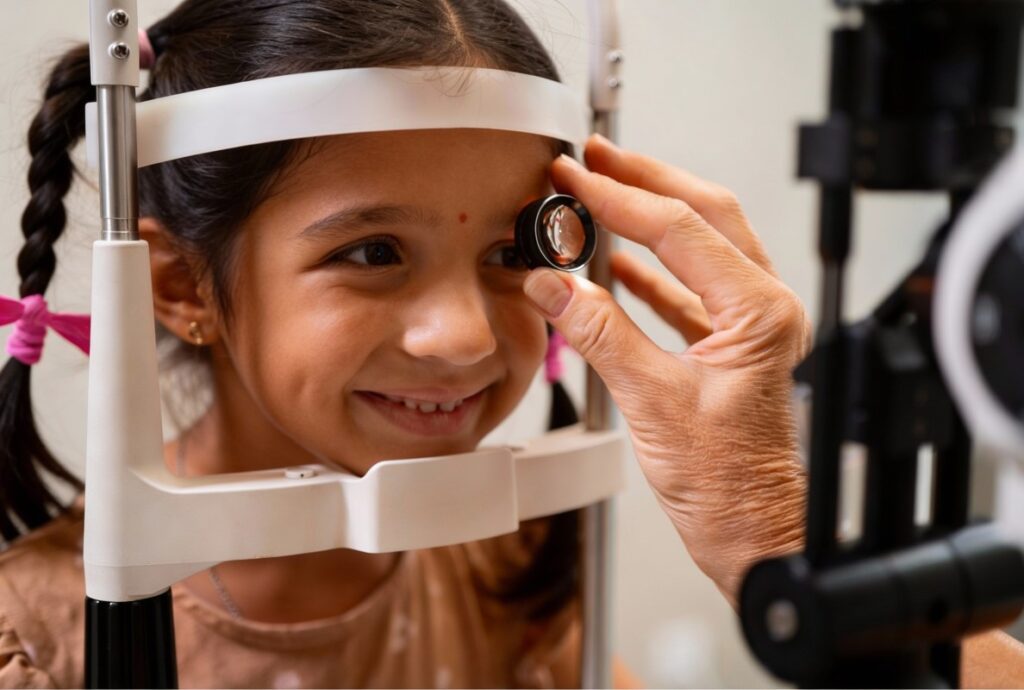
What is Pediatric or
Children’s Eye Care?
Children’s Eye Care focuses on finding and treating vision problems early in life. Many eye issues in kids, like squinting, lazy eye, or trouble seeing the board, can go unnoticed. These issues can affect learning and development. Regular eye check-ups help make sure your child’s vision is healthy. This allows them to see, play, and grow with confidence.
Common Symptoms in Children
- Frequent eye rubbing or blinking
- Squinting or tilting the head to see better
- Complaints of headaches or eye strain
- Holding books or screens too close
- Difficulty reading or copying from the board
- Poor performance in school
- One eye turning in or out (squint/strabismus)

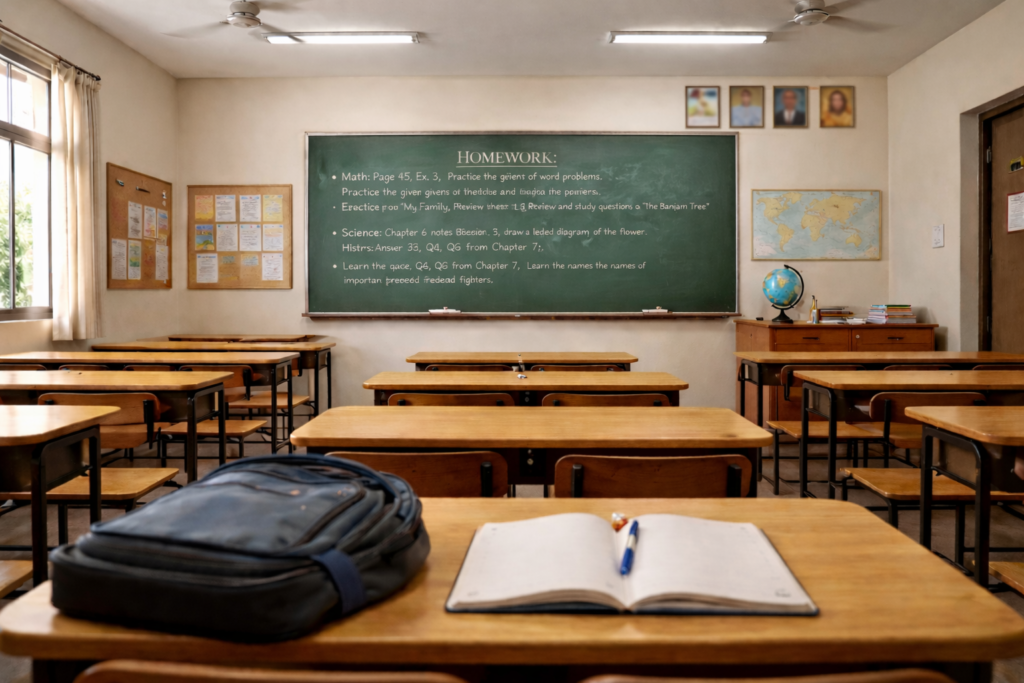
When to See a Doctor?
If your child shows any of the above signs or has trouble with everyday tasks that involve seeing clearly, it’s important to visit a pediatric eye specialist. Early detection and treatment can fix most problems and support healthy visual development.
Need help with your eyes?
Our Treatment Approach
- At Poona Eye Care, we understand that children require a different type of care, one that combines clinical precision with a warm, reassuring touch.
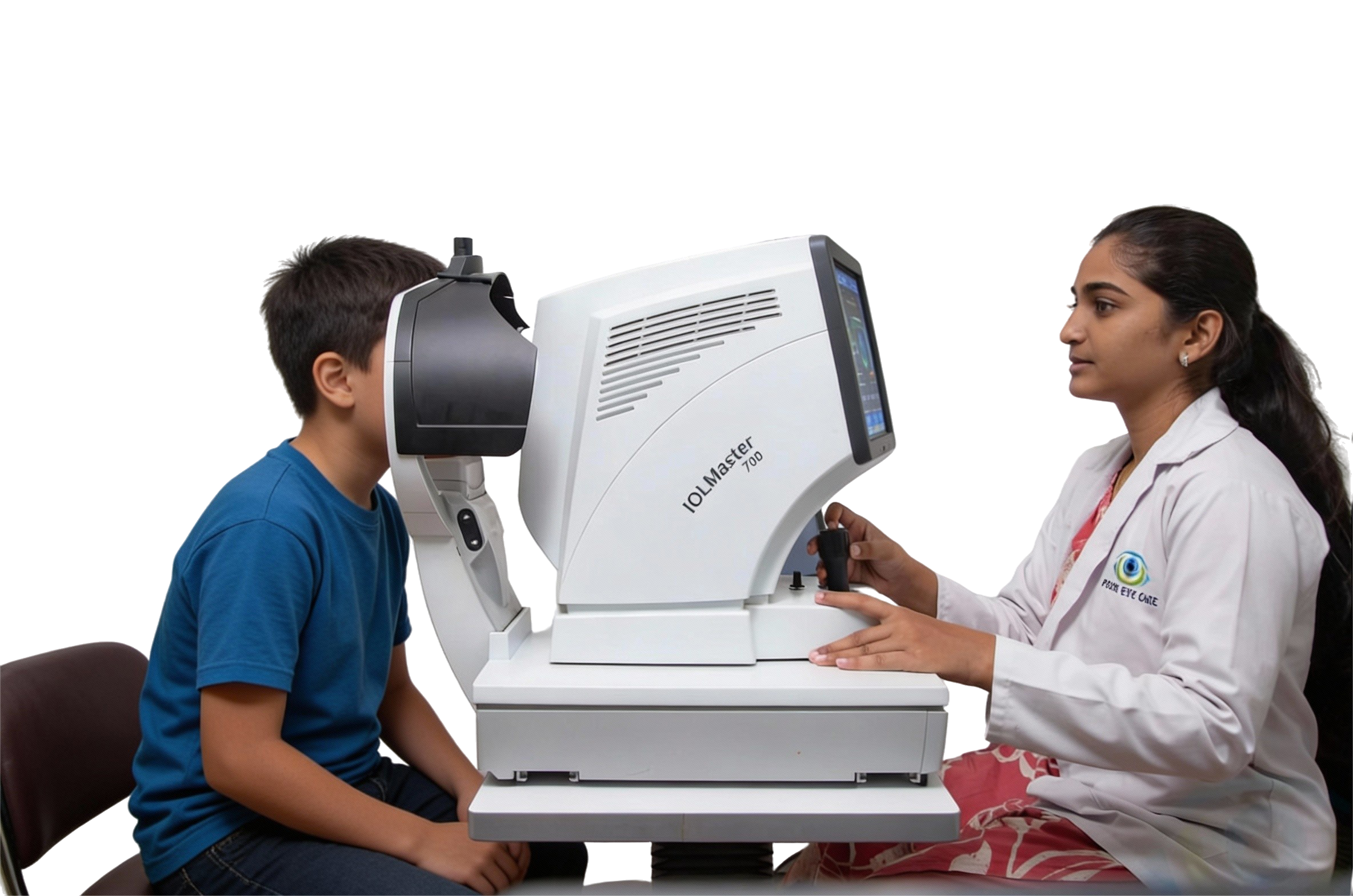
- Our pediatric eye assessments begin with visual acuity tests suited to your child’s age. This is followed by alignment checks, cycloplegic refraction, and orthoptic evaluation.
- We use tools like the slit lamp and fundus examination to screen for conditions such as squint, amblyopia (lazy eye), refractive errors, and birth-related eye problems.
- Our specialists explain each step to ensure both the child and the parent feel at ease.
Chosen by Patients.
Trusted for Outcomes.
- Child-friendly diagnostic techniques designed for precise retinal assessment.
- Specialized in treating pediatric retinal conditions such as retinal detachment, and infections.
- Expertise in safe, age-appropriate treatments, including laser therapy and vitrectomy.
- Compassionate care provided by trained pediatric ophthalmologists and support staff.
- Regular follow-ups and family guidance for ongoing visual development.
FAQs
Is it possible for children to be born with vision issues?
Indeed, a number of eye conditions, such as cataracts, glaucoma, or ptosis, or drooping eyelids, can exist from birth. Early screening is crucial for this reason. Even in the absence of obvious symptoms, this is true.
How can I tell if my child has an eye condition?
- Keep an eye out for symptoms such as: - Eyes that are not aligned (drifting or crossed)
- Red eyes or excessive tears; a white spot in the pupil
- Sensitivity to light
- Constant squinting or tilting of the head; poor eye contact; inability to follow moving objects
Does frequent rubbing and blinking indicate a problem?
They might be. Blinking or rubbing could indicate allergies, eye strain, or untreated vision problems. The child's eyes should ideally be examined by an opthalmologist.
Can my child's behavior or learning be impacted by eye issues?
Of course. Children with vision issues may appear distracted, avoid reading, or perform poorly in school. Vision-related causes can be ruled out with an eye test.
My child was premature. Should I worry about eye health?
- Retinopathy of Prematurity (ROP) and other visual problems are possible in premature infants. Frequent eye exams are essential, particularly during the first few months.
Can over the counter / self-medication medicines cause problem to my child?
- Yes. Certain drop can cause serious side effects in the eyes.
At what age should my child have their first eye examination?
Children should have their eyes checked regularly from infancy through adolescence. Early eye examinations can help detect vision problems and eye conditions before they affect development and learning.
How often should my child have an eye check-up?
The frequency of eye examinations depends on your child's age, family history, and any existing eye conditions. Your pediatric ophthalmologist can recommend an appropriate schedule.
What are the common eye problems seen in children?
Some common pediatric eye conditions include refractive errors (nearsightedness, farsightedness, and astigmatism), lazy eye (amblyopia), crossed eyes (strabismus), congenital cataracts, and eye infections.
What is lazy eye (amblyopia), and can it be treated?
Amblyopia, or lazy eye, occurs when one eye does not develop normal vision. Early diagnosis and treatment can significantly improve visual outcomes and help prevent long-term vision loss.
What is strabismus (crossed eyes)?
Strabismus is a condition in which the eyes do not align properly and may point in different directions. Early treatment can help improve eye alignment and visual development.
Does excessive screen time affect my child's eyes?
Extended screen use may contribute to eye strain, dry eyes, and increased risk of myopia progression in some children. Regular breaks and outdoor activities can help support healthy vision.
Are glasses safe and beneficial for children?
Yes. Properly prescribed glasses can correct vision problems, support learning and development, and help prevent certain conditions from worsening.
What should I do if my child gets an eye injury?
Any eye injury should be evaluated promptly by an eye care professional. Immediate attention can help prevent complications and protect your child's vision.
Are childhood eye conditions hereditary?
Some eye conditions, including refractive errors, strabismus, congenital cataracts, and certain retinal disorders, can run in families. Informing your eye doctor about your family history can help with early detection and management.