
LASIK & Presbyond
Experience personalized laser correction with advanced LASIK treatment
What is LASIK and Presbyond?
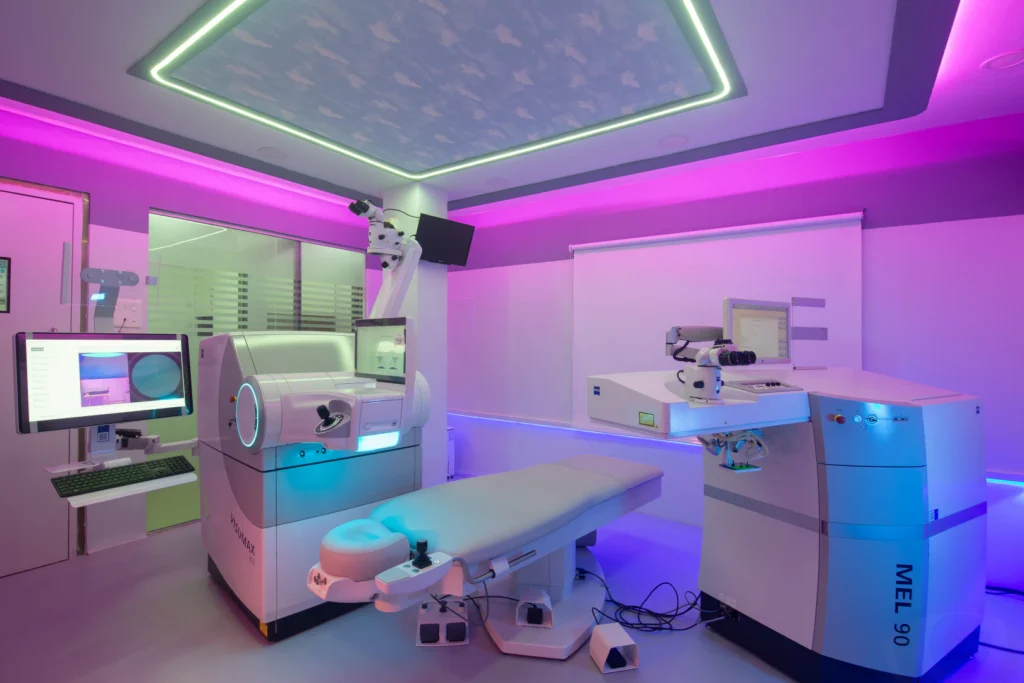
LASIK is a quick and safe laser procedure that fixes nearsightedness, farsightedness, and astigmatism (A common imperfection in the eye’s curvature). It reduces or even eliminates the need for glasses or contact lenses. Presbyond is a form of LASIK procedure designed for individuals over the age of 40 who tend to have problems with reading or near vision. Both treatments use precise bladeless technology to permanently reshape the cornea for clear vision.
Symptoms You Might Notice
- Difficulty seeing clearly without glasses
- Blurred distance or near vision
- Frequent headaches from eye strain
- Relying on reading glasses after age 40
- Trouble with daily tasks without corrective lenses
- Desire for a glasses-free lifestyle
- No significant changes in eye power for at least a year

When to See a Doctor?
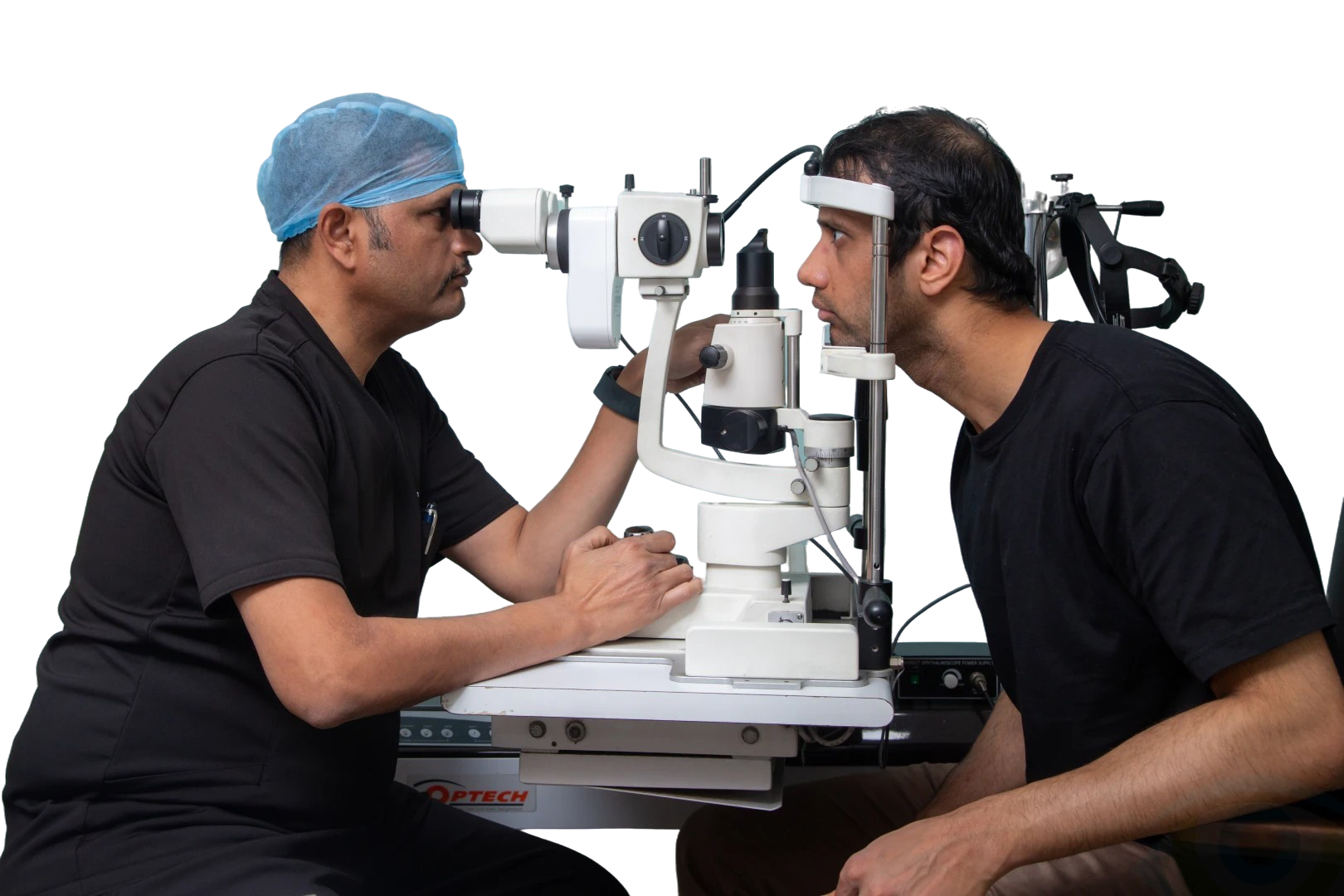
If glasses or contact lenses are getting in the way of your daily life, or if you’re over 40 and having trouble seeing up close, it may be time to consider LASIK or Presbyond. A detailed eye exam can help find out if you’re a good candidate for either procedure.
Need help with your eyes?
Our Treatment Approach
- At Poona Eye Care, we tailor our LASIK and PRESBYOND treatments using top-notch diagnostics like corneal topography, pachymetry, wavefront analysis, and pupilometry.
- For LASIK, we fix refractive errors such as myopia, hyperopia, and astigmatism by reshaping the cornea with a precision laser.
- For patients over 40, PRESBYOND, a modern form of laser blended vision, provides seamless near, intermediate and distance vision without needing reading glasses.
- Each treatment is customized according to your eye condition, lifestyle, and visual goals.
Chosen by Patients.
Trusted for Outcomes.
- Expert surgeons experienced in laser vision correction
- Customized treatment plans based on thorough pre-tests
- Bladeless LASIK and PRESBYOND technologies
- Safe, quick, and nearly painless procedures
- Minimal downtime and lasting visual clarity
- Trusted care with open consultations and support
FAQs
What vision problems can LASIK correct?
- Nearsightedness (Myopia): You can see nearby objects clearly, but distant ones appear blurry. This happens when the eyeball is slightly longer or the cornea is too curved.
- Farsightedness (Hypermetropia): Distant objects may be clearer than close ones. This occurs when the eyeball is too short or the cornea is too flat.
- Astigmatism: When the cornea has an unequal curvature shape, both near and far vision can be blurry.
Who is eligible for LASIK?
You may be suitable for LASIK if you:
- Are over 18 years old
- Have healthy eyes (no infection or injury)
- Are not pregnant or breastfeeding
- Don’t have autoimmune diseases
- Have a stable vision prescription for at least a year
- Have sufficient corneal thickness for the procedure
How does LASIK work?
- Your eye is numbed with anesthetic drops.
- A device gently holds your eyelids open.
- A small flap is created on the outer cornea using either a blade or laser.
- A laser reshapes the inner layer of the cornea to correct your vision.
- The flap is then replaced and begins healing on its own.
- You may feel mild dryness or irritation after surgery. Special eye drops are provided to help with healing.
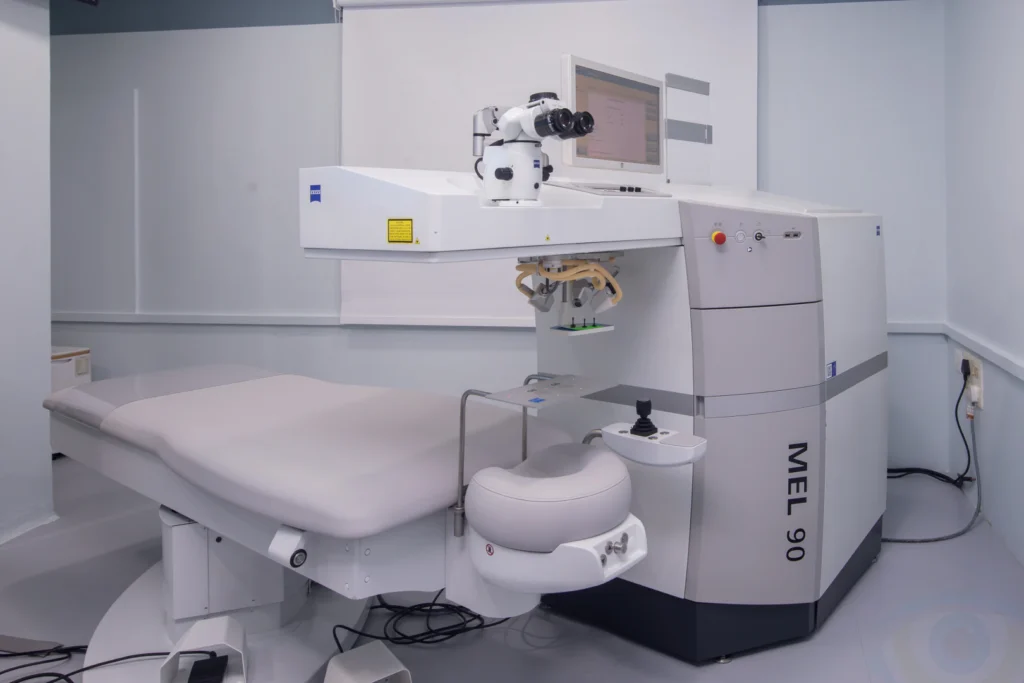
Poona Eye Care uses the world’s fastest laser system for accurate and safe treatment.
What precautions should I take before LASIK?
- Stop wearing contact lenses for a week.
- Discuss your current medications with your doctor.
- On surgery day, avoid perfumes, makeup, jewelry.
- Eat a light meal.
- Wear comfortable clothing.
- Bring a responsible person to accompany you.
What should I expect after LASIK?
Very few patients experience discomfort which could be -
- Mild tearing
- A sensation like something is in your eye
- Light sensitivity
- Blurry or hazy vision on the day of surgery
What care should I take after LASIK?
Do's:
- Use eye drops as prescribed
- Clean eyelid margins from the next day using sterile tissues
- Blink gently and frequently
- Resume screen activity after 2 days
- Wear sunglasses outdoors for two weeks
- Follow your regular diet
Don’ts:
- Avoid dust, touching or rubbing your eyes
- Don’t splash water or wash your face heavily for two weeks
- Don’t swim or use eyeliner for one month
- Avoid exercise for one week
What is Presbyond?
Presbyond Laser Blended Vision by Carl Zeiss is a laser treatment for presbyopia, which is the natural loss of the ability to focus on close objects that happens around age 40. It improves near, intermediate and distance vision, which reduces the need for reading glasses. The procedure is similar to LASIK. It takes about 5 to 10 minutes and is painless with quicker recovery. Most people see clearly by the next day. At Poona Eye Care, follow-ups happen within 24 to 48 hours, with ongoing checks for six months.
What conditions does Presbyond treat?
- Near vision problems due to aging (presbyopia)
- Myopia with presbyopia
- Hyperopia with presbyopia
- Astigmatism with presbyopia
- Emmetropia with presbyopia (good distance vision but difficulty with near tasks)
Is LASIK painful?
LASIK is generally not painful. Numbing eye drops are used before the procedure, so most patients only feel mild pressure for a few seconds. Some temporary irritation, watering, or a gritty sensation may occur for a few hours after surgery.
How long does the LASIK procedure take?
The laser treatment itself usually takes less than a minute per eye, while the entire procedure typically takes about 15–20 minutes for both eyes. Patients can usually go home shortly afterward.
How soon can I return to work after LASIK?
Many patients return to work within 24–48 hours after LASIK, depending on their job and comfort level. However, activities involving dust, swimming, or strenuous exercise may require a longer recovery period as advised by the surgeon.
Am I too old for LASIK or PRESBYOND?
There is no strict upper age limit for LASIK or PRESBYOND. Eligibility depends on factors such as overall eye health, prescription stability, corneal thickness, and the presence of conditions like cataracts or glaucoma. A comprehensive eye examination can determine suitability.
Will I still need glasses after PRESBYOND treatment?
PRESBYOND is designed to reduce dependence on reading, intermediate, and distance glasses. Most patients achieve excellent functional vision for daily activities, although some may occasionally require glasses for specific tasks, such as prolonged reading of very small print.
Are the results of LASIK and PRESBYOND permanent?
The vision correction achieved by LASIK and PRESBYOND is generally long-lasting. However, natural age-related changes in the eyes can occur over time, potentially affecting vision. Regular eye examinations help monitor eye health and visual performance.
What are the possible side effects of LASIK and PRESBYOND?
Common temporary side effects may include dry eyes, glare, halos around lights, light sensitivity, and fluctuations in vision during the healing period. Most symptoms improve within weeks to months. Your surgeon will discuss potential risks and expected outcomes during the consultation.